


Graphs explained
HEALTH DATA INSTITUTE
What is a graph?
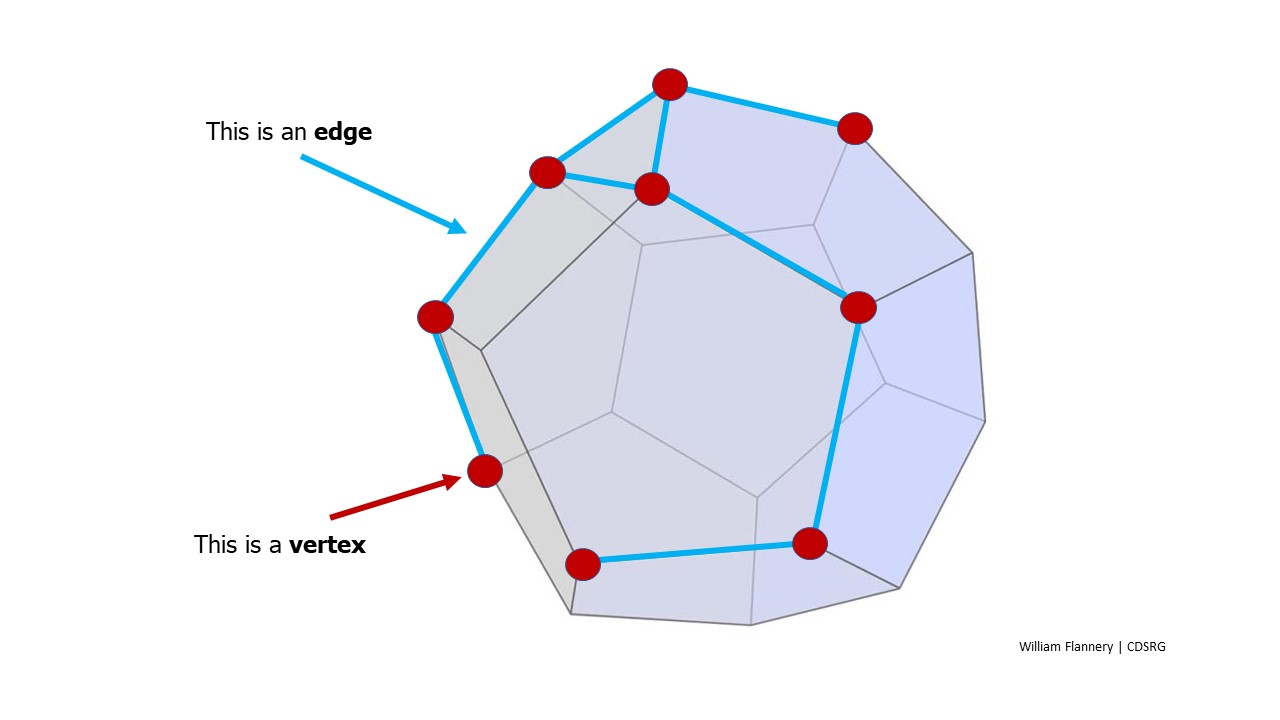
It is important to realise that those things with axes and squiggly lines are NOT graphs: They are charts or plots. In mathematics, graphs describe the surface of 3D objects (topology). When we consider a dodecahedron for example, we can see edges and we can see vertices where the edges intersect - see Figure 1. Leonhard Euler (1707-1783) is considered to be the father of topology.
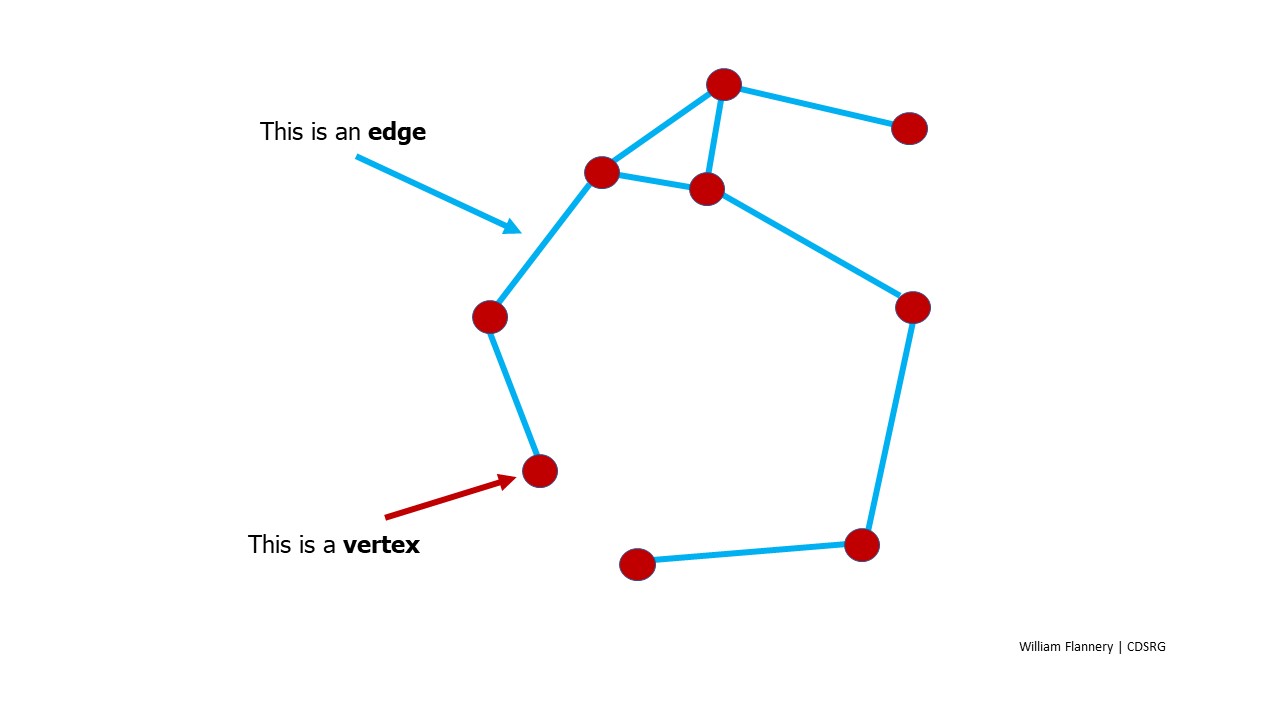
Again in mathematics, it becomes obvious why networks are called graphs. This is what happens when the dodecahedron is removed - see Figure 2.
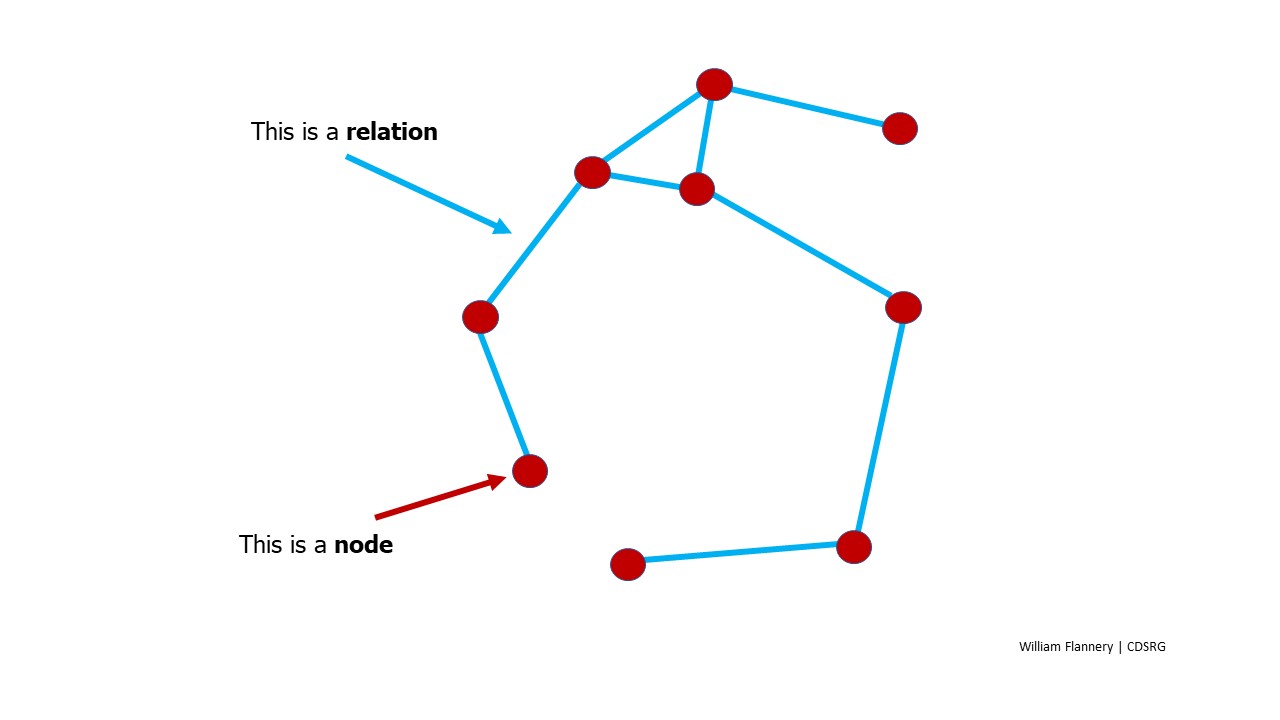
In the era of data science, the vertices are often called nodes and the connections between them are relations. - see Figure 3.
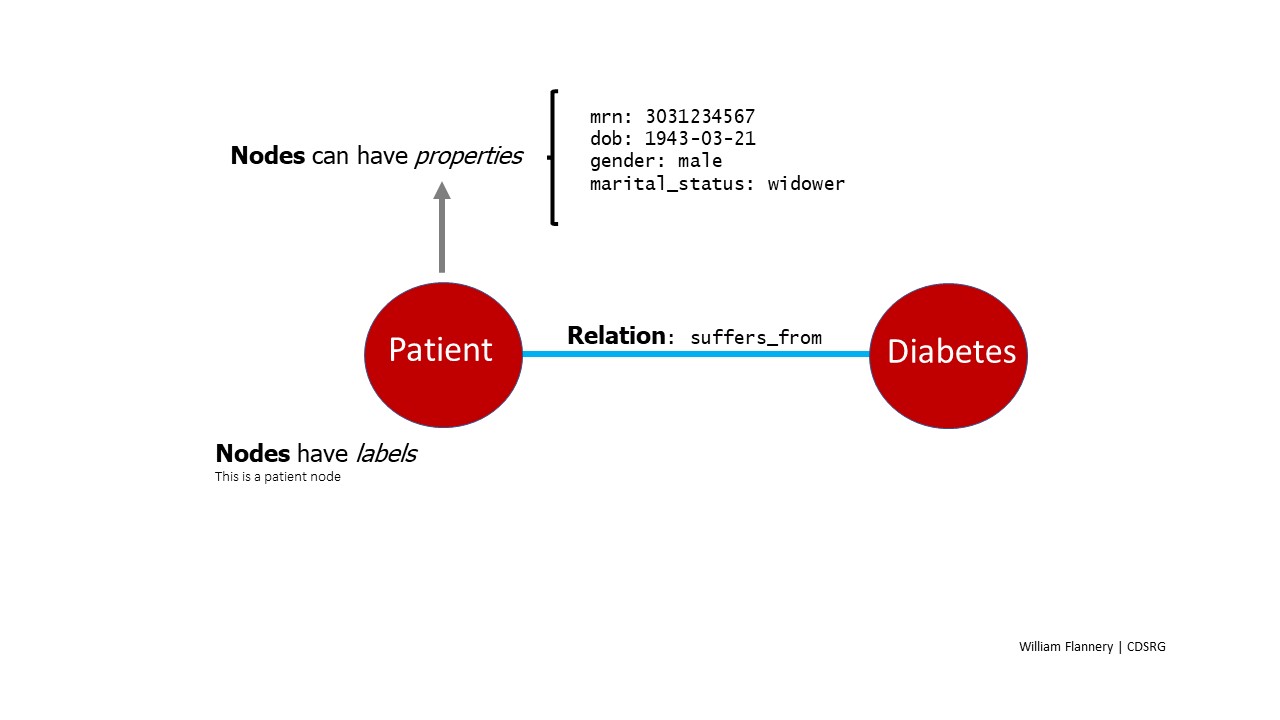
In a graph data structure, data is stored in labels and properties associated with a node. The power of the structure is labels and properties can also be store in relations. - see Figure 4.
For a comparison of relational databases versus graphs go to 'Graphs and relational databases compared'.

Health Data Institute
Digital, Data and Technology division
Royal Berkshire NHS Foundation Trust
Princes House
73a London Road
Reading, RG1 5UZ
Email us at healthdatainstitute@royalberkshire.nhs.uk
© 2022 - 2026 Health Data Institute
all rights reserved